Exercises for Stroke Recovery
How to Improve Movement and Independence
Exercises for Stroke Recovery
Recovering after a stroke can feel overwhelming, especially when everyday activities such as walking, gripping and lifting objects, or maintaining balance become more difficult.
The positive news is that exercise plays a vital role in stroke recovery. With the right rehabilitation and guidance, many people can improve their strength, movement, and independence over time.
This article explains some of the most effective exercises for stroke recovery and how specialist support can help you or your loved one make meaningful progress.
Why Exercise Is Important After a Stroke
Exercise is one of the most important parts of stroke rehabilitation. It helps the brain and body work together to regain lost movement and function.
Research shows that targeted rehabilitation exercises can improve mobility, balance, strength, and overall physical function after stroke.
How Exercise Helps the Brain Recover (Neuroplasticity)
After a stroke, the brain can adapt and form new pathways; a process known as neuroplasticity.
Repetitive, task-specific exercises help retrain the brain to regain movement and coordination. Physiotherapy uses this principle to support recovery and improve independence.
Types of Exercises for Stroke Recovery
A well-rounded rehabilitation programme includes a combination of different exercise types, each targeting specific areas of recovery.
Strength Exercises After Stroke
Muscle weakness and loss of strength on the stroke affected side, plus deconditioning generally, is common following a stroke. Strengthening exercises help rebuild muscle power and help improve everyday activities such as standing, walking, and lifting objects.
Examples of Strength Exercises
- Sit-to-stand practice
- Leg strengthening exercises
- Arm and shoulder strengthening
- Resistance exercises
Balance Exercises After Stroke
Balance problems are common after stroke and can increase the risk of falls. Balance training helps improve stability and confidence when moving.
Examples of Balance Exercises
- Standing balance practice
- Weight shifting
- Heel-to-toe standing or walking
- Stepping exercises
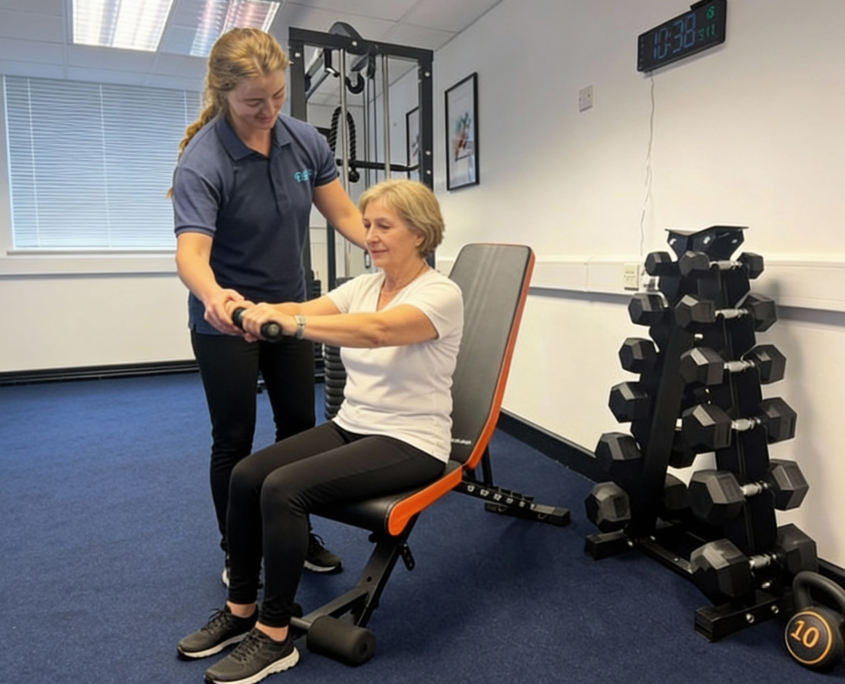
Hand and Arm Exercises After Stroke
Many stroke survivors experience difficulty using their hand or arm.These hand and arm exercises help improve independence with tasks such as dressing, eating and using a phone.
Examples of Dexterity Exercises
- Picking up small objects
- Grip strengthening exercises
- Finger tapping and coordination tasks
- Reaching and placing activities
Walking and Mobility Exercises
Regaining walking ability is a key goal for many people after a stroke. Physiotherapy often focuses on real-life movement patterns to improve mobility and independence.
Gait and Functional Training
- Walking practice
- Step training
- Transfers (e.g. sit to stand)
- Functional movement tasks
Cardiovascular and Endurance Exercises
Fatigue and reduced stamina are common after a stroke. Cardiovascular exercise can improve energy levels, walking endurance and overall recovery.
Building Stamina Safely
- Walking for longer distances
- Cycling
- Low-impact aerobic exercise

How Often Should You Do Stroke Recovery Exercises?
Consistency is key to improving recovery.
Creating a Consistent Routine
- Practice exercises regularly (often daily)
- Start with short sessions and build gradually
- Focus on quality of movement
- Repeat exercises to reinforce learning and neuroplasticity
Research suggests that more frequent rehabilitation can lead to better outcomes after stroke.
How Physiotherapy Supports Stroke Recovery
While exercises can be done at home, working with a specialist can significantly improve progress.
Benefits of Specialist Neurological Physiotherapy
A neurological physiotherapist can:
- assess your individual needs
- create a personalised exercise programme
- guide safe and effective progression
- help you stay motivated and consistent
Physiotherapy is a key part of stroke rehabilitation and helps people regain movement, balance, and independence.
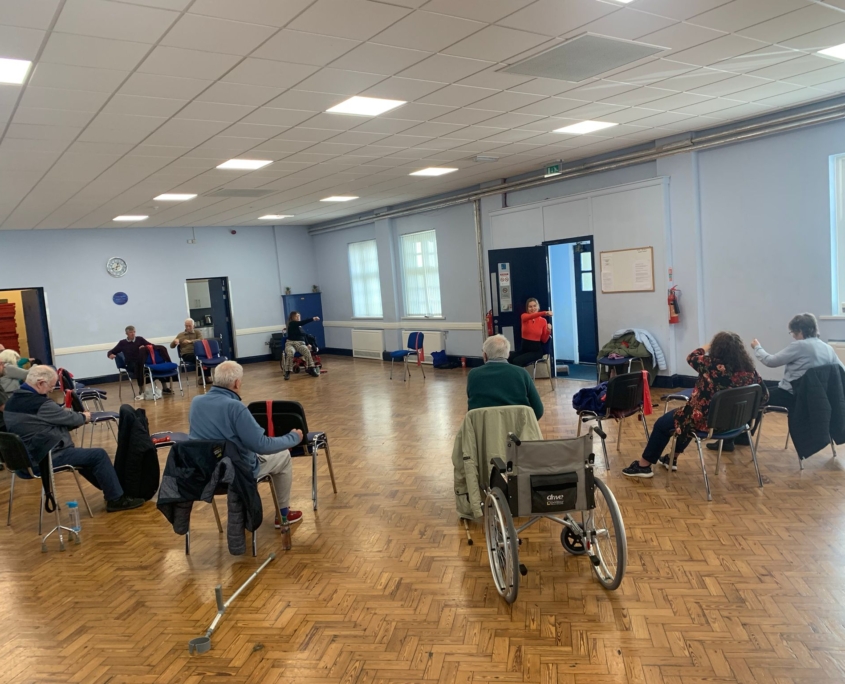
We also provide a range of group exercise classes. Group exercise provides safe, guided activity that keeps the nervous system and muscles engaged. You can find out more about the benefits of group exercise for neurological conditions here.
When to Seek Help for Stroke Rehabilitation
You may benefit from specialist support if you are experiencing:
- difficulty walking or balancing
- weakness in your arm or leg
- reduced hand function
- slow progress with recovery
- loss of confidence in movement
Early and ongoing rehabilitation can make a significant difference.
Start Your Stroke Recovery Journey
Recovery after a stroke takes time, but with the right exercises and support, meaningful improvement is possible.
At Neurological Physiotherapy, we provide personalised rehabilitation programmes designed to help you:
- improve strength and mobility
- regain independence
- build confidence
- maximise your recovery potential
If you or a loved one is recovering from a stroke, our team is here to support you every step of the way.
Contact Us Now to speak to one of our team.

Frequently Asked Questions About Stroke Recovery
What are the best exercises for stroke recovery?
A combination of strength, balance, mobility, and hand exercises is most effective.
How often should I exercise after a stroke?
Regular practice, often daily, is recommended for the best results.
Can exercise improve recovery months after a stroke?
Yes. Many people continue to improve months or years after a stroke with consistent rehabilitation.
What is neurological physiotherapy?
Neurological physiotherapy is specialist rehabilitation for people with conditions affecting the brain and nervous system, such as stroke, Parkinson’s disease or multiple sclerosis.
When should I start stroke rehabilitation?
Rehabilitation often begins in hospital, but continuing therapy after discharge can play an important role in maximising recovery.
Is it safe to exercise at home after a stroke?
Yes, but it is important to follow guidance from a physiotherapist to ensure exercises are safe and appropriate.