


Vestibular Symptoms and their Causes:
What are they and why am I experiencing them?
Why am I having Vestibular Symptoms?
This article explains what the vestibular system is, what common vestibular symptoms are, and the conditions that may have cause them.
Understanding Vestibular Symptoms
Vestibular symptoms are problems related to your body’s balance system, which is controlled mainly by the inner ear and parts of the brain. This system is known as the vestibular system.
Vestibular System
The vestibular system is the sensory apparatus of the inner ear that detects head motion and spatial orientation to maintain balance and stabilise vision. It integrates signals from specialised organs with visual and proprioceptive inputs, enabling coordinated posture, movement, and gaze control.
Key facts
- Location: Inner ear, within the temporal bone
- Main organs: three semicircular canals, utricle, saccule
- Function: Detect angular and linear acceleration for balance and spatial orientation
- Primary nerve: Vestibular branch of cranial nerve VIII
- Core reflexes: Vestibulo-ocular and vestibulospinal reflexes
Structure and components
The vestibular system comprises a peripheral and central portion.
The peripheral system includes the vestibular labyrinth—three semicircular canals (anterior, posterior, and horizontal) that sense rotational movements, and two otolith organs, the utricle and saccule, that detect linear acceleration and gravity. These structures are filled with endolymph and contain hair cells whose deflection converts mechanical motion into neural signals transmitted through the vestibular nerve. The central system consists of vestibular nuclei in the brainstem and their projections to the cerebellum, spinal cord, ocular motor nuclei, and thalamus.
Function and reflex integration
The vestibular apparatus provides continuous information about head position and movement. The brain integrates these signals with visual and proprioceptive cues to coordinate equilibrium. Two major reflex pathways mediate automatic responses: the vestibulo-ocular reflex (VOR) stabilises gaze by generating compensatory eye movements during head rotation, and the vestibulospinal reflex (VSR) adjusts muscle tone and posture to prevent falls.
Neural pathways
Sensory input from vestibular hair cells travels via bipolar neurons of the Scarpa’s ganglion through the vestibular branch of the vestibulocochlear nerve to four major vestibular nuclei—superior, medial, lateral, and inferior—on the floor of the fourth ventricle. These nuclei integrate multisensory information and send efferent projections to ocular motor nuclei, cerebellar regions (especially the flocculonodular lobe), and spinal tracts that control head, neck, and limb muscles.

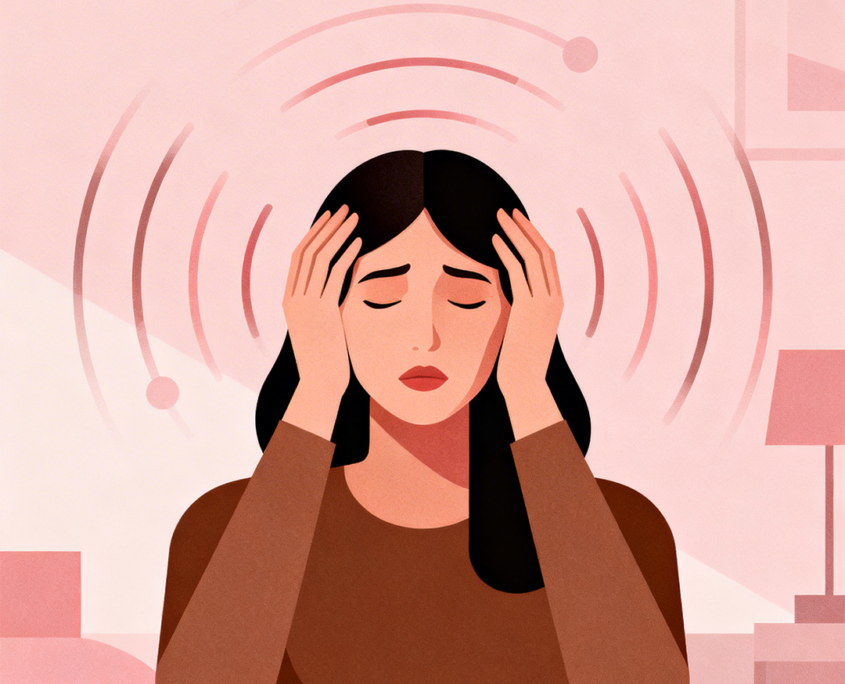
Vestibular symptoms are problems related to your body’s balance system

Common vestibular symptoms
- Dizziness – feeling lightheaded or faint
- Vertigo – a spinning or moving sensation, even when you’re still
- Balance problems – unsteadiness, veering when walking, or difficulty standing
- Nausea and vomiting – often triggered by motion or vertigo
- Blurred or unstable vision – things may seem to bounce or shift (called oscillopsia)
- Sensitivity to movement – discomfort in busy environments or with head movements
- Disorientation – feeling “off” or not grounded in space
Common Causes
Vestibular symptoms can be linked to conditions affecting the inner ear or brain, including:
- Benign Paroxysmal Positional Vertigo (BPPV): a common inner ear disorder that causes brief episodes of vertigo- the false sense that you or your surroundings are spinning- triggered by changes in head position. It is the leading cause of vertigo in adults and, while benign, can significantly impact balance and daily activities.
- Vestibular Neuritis: an inner ear disorder caused by inflammation of the vestibular nerve, which transmits balance signals from the inner ear to the brain. It often follows a viral infection.
- Ménière’s Disease: a chronic inner ear disorder that disrupts balance and hearing through abnormal buildup of inner ear fluid, known as endolymphatic hydrops.
- Migraine: a neurological disease characterised by recurrent attacks of moderate to severe headache often accompanied by nausea, light sensitivity, or visual disturbances. However it can cause dizziness even without headache.
When to Seek Help
You should consider medical advice if symptoms:
- Are sudden, severe, or persistent
- Come with hearing loss, double vision, or weakness
- Interfere with daily life or worsen over time
A GP or neurological physiotherapist will assess your balance, eye movements, and hearing to find the cause.

