


Strength Training for Neurological Conditions:
Benefits for Stroke, Parkinson’s and MS
I Have a Neurological Condition. Will Strength Training Help?
There is a myth that it is unsafe for people with neurological conditions to strength train. At Neurological Physiotherapy we have recently created a 12-week progressive strength and functional training programme, delivered in a group format, and have been blown away by the progress that the group attendees have made. We want to encourage more people with a neurological condition to take up strength training, to support your day to day functioning, confidence, and independence.
Over a 12-week progressive strength and functional training programme, participants in the strength-based rehabilitation group demonstrated significant improvements in strength, movement quality, and overall confidence. The programme combined evidence-based progressive resistance training with functional movement exercises tailored to a wide range of neurological conditions and individual abilities.
Can Strength Training Help Neurological Conditions?
Strong Improvements Across the Group
Throughout the programme, group attendees achieved measurable gains in both upper and lower body strength. Many participants progressed from bodyweight-only movements to externally loaded exercises, highlighting improvements in physical capacity, confidence, and movement control.
Upper body strength improved substantially, particularly in lateral pulldown performance, suggesting enhanced postural stability and upper limb control. Lower body exercises including deadlifts, squats, and hip hinge progressions showed clear improvements in functional strength, supporting activities such as transfers, walking, balance, and everyday movement.
In addition to physical gains, clients demonstrated improved exercise tolerance, greater movement confidence, and enhanced movement quality over time. The supportive small-group environment also played a key role in maintaining motivation, consistency, and engagement throughout the programme.
“Many people with neurological conditions become less active due to fatigue, weakness, or fear of falling. Unfortunately, reduced activity can lead to further weakness and reduced confidence.”


Are you interested in group exercise sessions? Please contact the clinic for more information about our exercise classes.
Average Group Improvements Over 12-Weeks
| Exercise | Average Start | Average End | Approximate Improvement |
| Deadlift | 4.6kg | 7.5kg | 63% |
| Lat Pulldown | 12.1kg | 34.0kg | 181% |
| Shoulder Press | 2.5kg | 4.3kg | 72% |
| Squat | 0.4kg | 4.1kg | 1039% |
| Hamstring Curl | 6.1kg | 14.7kg | 141% |
| Hip Hinge | 3.0kg | 6.1kg | 103% |
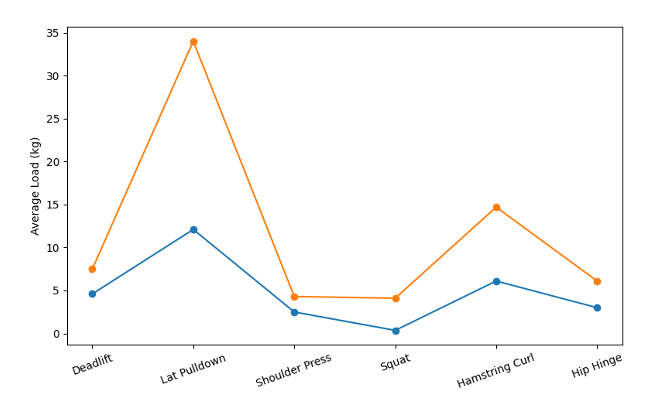
Graph illustrating improvements from week 1 to week 12
Blue line as Week 1
Orange line as Week 12
People with stroke, Parkinson’s and MS can benefit from strength training and neurological physiotherapy. Learn how exercise can improve mobility, balance, walking, confidence, and independence.
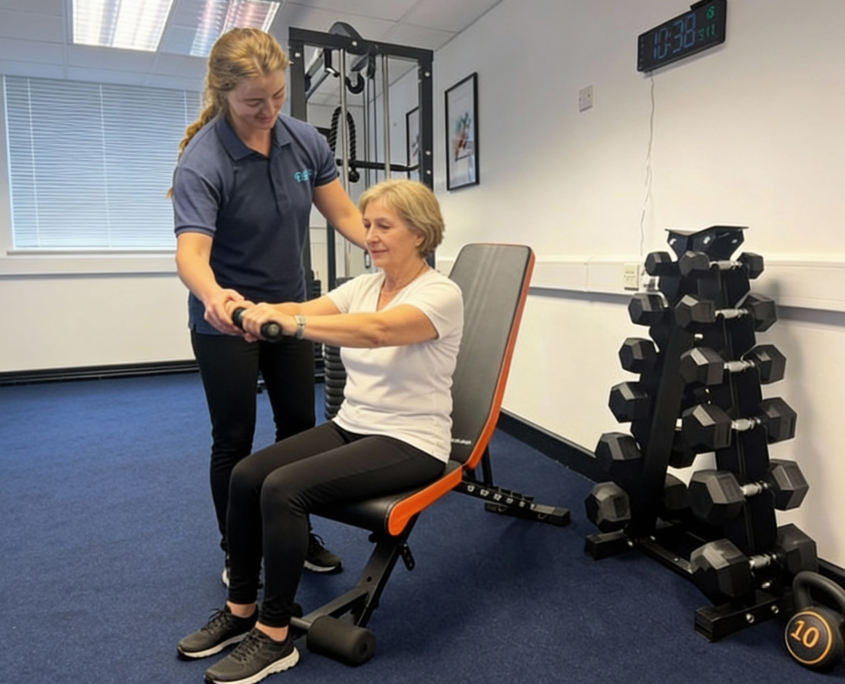
Benefits of Strength Training for Neurological Rehabilitation
A Functional and Individualised Approach
The programme was designed to be adaptable for individuals with varying neurological presentations and levels of ability. Exercises were individually progressed while maintaining a structured group setting that encouraged peer support and accountability.
Sessions focused not only on strength development, but also on improving real-world function, including:
- Transfers and sit-to-stand ability
- Posture and trunk control
- Balance and stability
- Gait and walking confidence
- Functional independence in daily activities
Using progressive strength training principles within a neuro rehabilitation framework allowed participants to safely build capacity while improving movement efficiency and confidence.
The Impact of Structured Group Rehabilitation
The outcomes from this 12-week programme demonstrate the effectiveness of structured, progressive strength-based exercise delivered within a supportive group environment. Participants achieved meaningful physical improvements while also gaining confidence and independence through consistent coaching, progression, and encouragement.
This approach continues to show the value of evidence-based neuro rehabilitation in helping individuals improve strength, function, and quality of life.
If you would be interested in joining our strength-based rehabilitation group please contact us here


Frequently Asked Questions About Strength Training for Neurological Conditions
Can strength training help neurological conditions?
Yes. Strength training can help many people living with neurological conditions including stroke, Parkinson’s disease, multiple sclerosis (MS), brain injury, and other neurological disorders. Specialist exercise programmes may improve muscle strength, walking ability, balance, posture, mobility, confidence, and independence.
Research shows that regular exercise and rehabilitation can also support neuroplasticity — the brain’s ability to adapt and relearn movement patterns.
Can exercise improve walking after a stroke?
Yes. Exercise and neurological physiotherapy are important parts of stroke rehabilitation.
Strength training, walking practice, balance exercises, and task-specific rehabilitation can help improve:
- Walking speed
- Step length
- Balance
- Endurance
- Confidence during walking
Many people continue to improve walking ability months or even years after a stroke with ongoing rehabilitation and exercise.
What are the best exercises after a stroke?
The best exercises after stroke depend on the individual’s symptoms, goals, strength, and mobility level.
Commonly used exercises may include:
- Sit-to-stand practice
- Walking exercises
- Balance training
- Step-ups
- Strengthening exercises
- Functional movement practice
- Upper limb rehabilitation exercises
A neurological physiotherapist can create a personalised exercise programme designed around meaningful daily activities and rehabilitation goals.
Can strength training help Parkinson’s disease?
Yes. Strength training and exercise are widely recommended for people with Parkinson’s disease.
Exercise may help improve:
- Walking
- Balance
- Posture
- Mobility
- Muscle strength
- Confidence
- Freezing of gait
Regular physical activity may also help people maintain independence and remain active for longer.
Is exercise safe for people with neurological conditions?
In most cases, yes, especially when guided by a neurological physiotherapist or appropriately trained healthcare professional.
Exercise programmes should always be tailored to the individual’s:
- Diagnosis
- Strength
- Balance
- Fatigue levels
- Mobility
- Falls risk
- Overall health
Specialist neurological physiotherapy helps ensure exercises are safe, appropriate, and progressed gradually.
Can exercise help improve balance problems?
Yes. Balance rehabilitation is an important part of neurological physiotherapy.
Exercises may focus on:
- Postural control
- Weight shifting
- Standing stability
- Walking confidence
- Coordination
- Falls prevention
Improving balance can help reduce falls risk and increase confidence during everyday activities.
How often should people with neurological conditions exercise?
The ideal frequency varies depending on the individual and their condition.
Research suggests that regular, consistent exercise and rehabilitation are important for improving strength, mobility, and neurological recovery.
Many people benefit from a combination of:
- Supervised physiotherapy
- Home exercise programmes
- Functional activity practice
- Ongoing physical activity
A neurological physiotherapist can help design an exercise plan that is realistic, safe, and sustainable.
Can exercise improve fatigue in neurological conditions?
Although fatigue is common in many neurological conditions, appropriate exercise can often help improve energy levels, endurance, and physical conditioning over time.
Exercise programmes should be carefully tailored to avoid overexertion while gradually building strength and activity tolerance.
Is it ever too late to start neurological rehabilitation?
No. Many people can continue making improvements months or years after diagnosis or injury.
The nervous system can continue adapting through neuroplasticity, particularly when rehabilitation is repetitive, meaningful, and goal-focused.
Even small improvements in strength, balance, or mobility can make a significant difference to independence and quality of life.
What is neurological physiotherapy?
Neurological physiotherapy is specialist rehabilitation for people with conditions affecting the brain, spinal cord, or nervous system.
Treatment may focus on:
- Walking rehabilitation
- Balance retraining
- Strength and conditioning
- Mobility
- Coordination
- Posture
- Falls prevention
- Functional independence
Neurological physiotherapists create personalised rehabilitation programmes designed around each person’s goals and daily challenges.
Can neurological physiotherapy help reduce falls risk?
Yes. Falls prevention is a major part of neurological rehabilitation.
Physiotherapy can help improve:
- Balance
- Walking stability
- Strength
- Posture
- Confidence during movement
Therapists may also assess walking aids, home environments, and movement strategies to help reduce falls risk.

