New STROLLL Augmented Reality Rehabilitation Launches at Neurological Physiotherapy
Innovative Rehabilitation Technology to Improve Walking, Balance and Independence
At Neurological Physiotherapy, we are excited to announce the launch of STROLLL — an innovative augmented reality (AR) rehabilitation system designed to help people improve walking, balance, posture, confidence, and independence following a diagnosis of a neurological condition such as stroke, Parkinson’s disease, and multiple sclerosis (MS).
For many stroke survivors and people living with other neurological conditions, walking difficulties, poor balance, reduced confidence, and fear of falling can have a major impact on everyday life. Rehabilitation is often essential to help rebuild movement, mobility, and independence.
STROLLL combines specialist neurological physiotherapy with cutting-edge AR technology to create engaging, personalised rehabilitation that supports real-world movement and recovery.
We are proud to bring this innovative rehabilitation technology to patients across South Manchester, including Didsbury, Chorlton-cum-Hardy, Sale, Altrincham, Stockport and surrounding areas.
What Is STROLLL Rehabilitation?
STROLLL is an advanced AR neurorehabilitation system designed to support people with neurological conditions affecting:
- Walking
- Balance
- Posture
- Coordination
- Mobility
- Confidence during movement
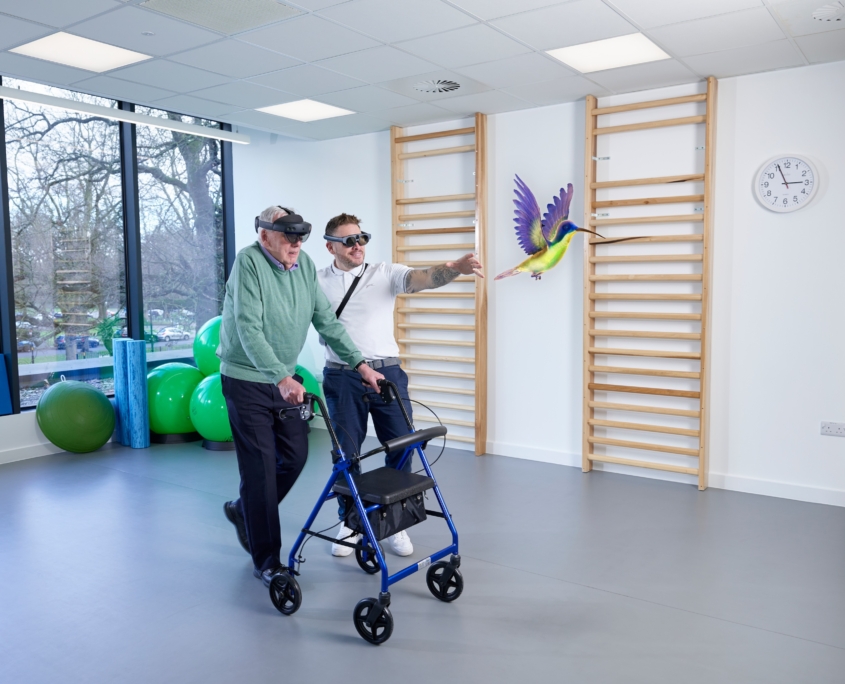
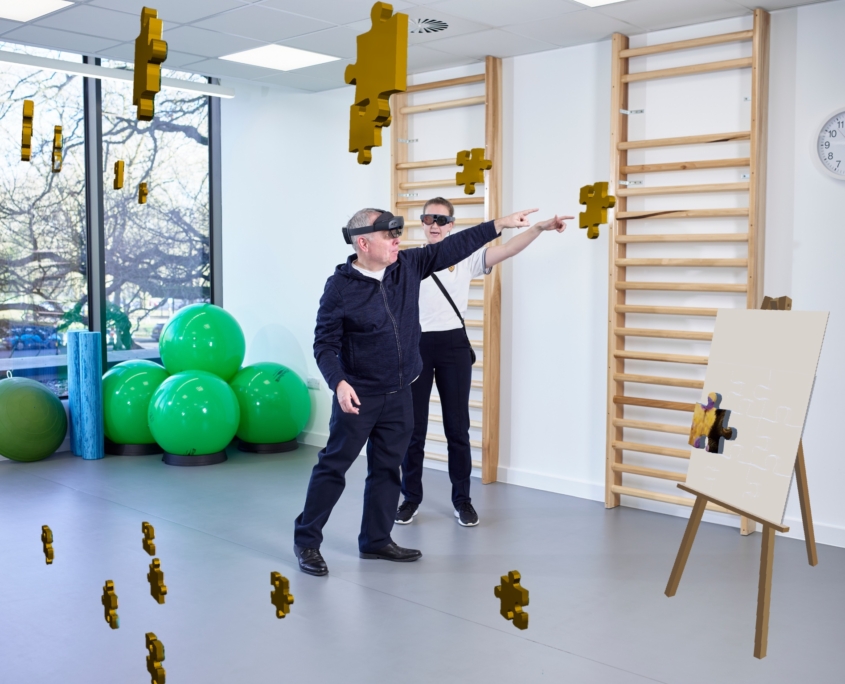
Using lightweight see-through AR glasses, STROLLL overlays interactive visual guidance and rehabilitation activities directly into the real world.
Unlike virtual reality (VR), users remain fully aware of their surroundings while participating in therapy. This allows rehabilitation to feel more natural, functional, and relevant to everyday life.
The system is designed to support:
- Gait rehabilitation
- Falls prevention
- Walking confidence
- Balance retraining
- Cognitive-motor rehabilitation
- Functional mobility practice
How STROLLL Can Help Stroke Recovery?
One of the most common concerns after a stroke is:
“Will I walk normally again?”
Walking difficulties and balance problems are extremely common after stroke and can affect independence, confidence, and quality of life.
STROLLL rehabilitation is designed to help stroke survivors practice meaningful movement through repetitive, task-specific rehabilitation that supports neuroplasticity — the brain’s ability to adapt and relearn movement patterns after injury.
Therapy activities may include:
- Visual stepping targets to improve walking pattern
- Balance exercises
- Obstacle navigation practice
- Posture retraining
- Turning and directional changes
- Walking confidence exercises
- Interactive rehabilitation games
The engaging nature of STROLLL helps encourage repetition and participation, both of which are important for stroke recovery.
Improving Balance and Confidence After Stroke
Many stroke survivors experience:
- Reduced confidence walking outdoors
- Fear of falling
- Difficulty navigating busy environments
- Reduced balance
- Increased falls risk
These challenges can lead people to become less active, which may further reduce strength, mobility, and independence.
STROLLL rehabilitation allows patients to practice movement and walking tasks in a safe, supported environment while remaining connected to the real world.
Visual and auditory cueing can help improve:
- Walking rhythm
- Step length
- Posture
- Coordination
- Confidence during movement
This real-world approach to rehabilitation can help improve functional mobility and independence in everyday life.

Start Neurological Rehabilitation with STROLLL
If you or a loved one is looking for support with stroke recovery, walking difficulties, balance problems, or neurological rehabilitation, STROLLL may help improve confidence, mobility, and independence. To learn more about STROLLL AR rehabilitation or arrange an assessment, contact Neurological Physiotherapy today.
Contact us now to speak to one of our team.

Why Early Rehabilitation Matters
Many patients and families search for ways to recover faster after a stroke.
Research consistently shows that rehabilitation intensity and repetition are important factors in neurological recovery. Early access to rehabilitation may help improve long-term outcomes and confidence.
Unfortunately, many people experience delays or limited therapy access after hospital discharge.
STROLLL allows us to provide engaging, intensive neurological rehabilitation that can complement existing NHS services and support ongoing recovery.
Neurological Rehabilitation with STROLLL
Looking for help to improve walking, balance, and confidence? Neurological Physiotherapy now offers STROLLL AR rehabilitation for stroke, Parkinson’s, MS and other neurological presentations across South Manchester.
Contact us now for more information and to book an assessment.
Why Augmented Reality Rehabilitation Is Different
Traditional rehabilitation exercises can sometimes feel repetitive or difficult to maintain long-term.
STROLLL uses interactive rehabilitation games and AR cueing to make therapy more engaging and motivating.
Unlike fully immersive virtual reality:
- Patients remain aware of their surroundings
- Therapists can provide hands-on support
- Therapy can focus on real-world walking and movement
- There is less risk of motion sickness or disorientation
This makes STROLLL particularly suitable for neurological rehabilitation and mobility training.
Supporting Parkinson’s Disease and MS Rehabilitation
Although many people search for help after stroke, STROLLL rehabilitation can also support people living with:
- Parkinson’s disease
- Multiple sclerosis (MS)
- Balance disorders
- Falls risk
- Neurological mobility difficulties
For people with Parkinson’s disease, STROLLL may help improve:
- Freezing of gait
- Shuffling steps
- Walking rhythm
- Movement initiation
- Confidence during walking
Research projects supported by Parkinson’s UK are currently exploring how AR rehabilitation may improve walking and balance for people with Parkinson’s.
Personalised Neurological Rehabilitation at Neurological Physiotherapy
At Neurological Physiotherapy, rehabilitation is always tailored to the individual.
Our experienced neurological physiotherapists integrate STROLLL into personalised treatment programmes designed around:
- Walking goals
- Balance rehabilitation
- Falls prevention
- Mobility confidence
- Functional independence
- Real-world activities
The system can also record rehabilitation data and outcome measures, helping therapists monitor progress and adapt therapy programmes over time.
Frequently Asked Questions About STROLLL & Stroke Recovery
Can STROLLL help improve walking after a stroke?
Yes. STROLLL rehabilitation focuses on repetitive, task-specific gait and balance training designed to improve mobility, walking confidence, and functional independence after stroke.
Can STROLLL help balance problems?
Yes. STROLLL includes balance and posture rehabilitation activities designed to improve stability, confidence, and falls prevention.
Is STROLLL safe?
Yes. STROLLL uses see-through augmented reality glasses that allow users to remain aware of their surroundings while therapy is supervised by trained healthcare professionals.
Can STROLLL help Parkinson’s freezing of gait?
Visual and auditory cueing strategies used within STROLLL may help improve movement initiation and walking rhythm in people experiencing freezing episodes.
When should I start stroke rehabilitation?
Rehabilitation often begins in hospital, but continuing therapy after discharge can play an important role in maximising recovery.