How to Improve Hand Function After a Stroke:
Exercises, Therapy, and Recovery Tips
How to Improve Hand Function After a Stroke
After a stroke, many people say the same thing:
“I just want to use my hand normally again.”
Difficulty using the hand and arm is one of the most common and frustrating effects of stroke. Tasks that once felt automatic such as holding a cup, buttoning a shirt, writing, cooking, or using a phone, can suddenly become difficult or impossible.
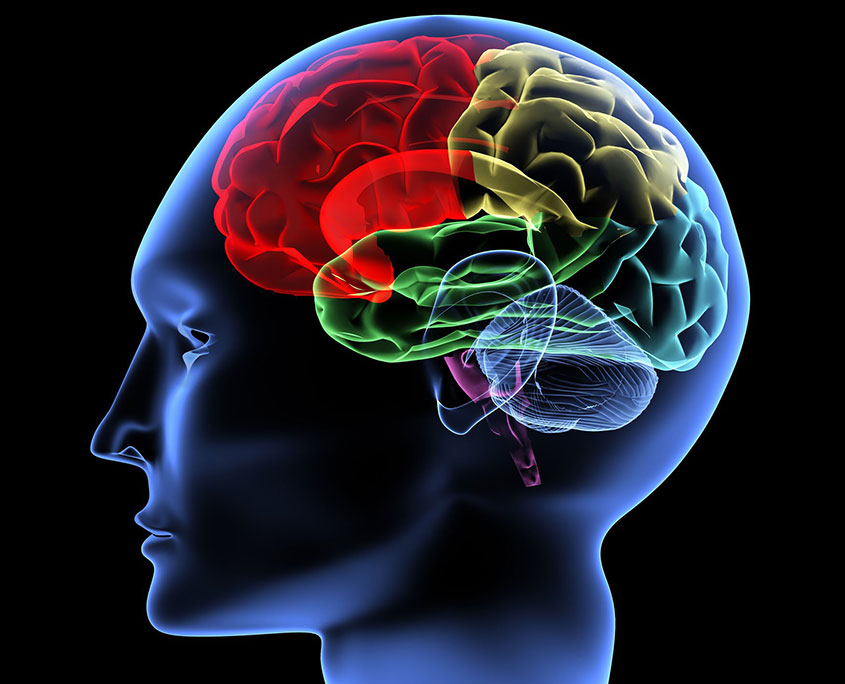
The good news is that hand function can improve after a stroke. Recovery is driven by neuroplasticity, the brain’s ability to reorganise and form new neural pathways through practice and rehabilitation. Research shows that repetitive, task-specific rehabilitation can significantly improve hand dexterity, grip strength, and independence after stroke.
At Neurological Physiotherapy, we support stroke survivors across South Manchester and Cheshire with specialist neurological physiotherapy tailored to improving real-life hand and arm function.
Why Does a Stroke Affect Hand Function?
A stroke can damage the areas of the brain responsible for movement, coordination, sensation, and muscle control.
This may cause:
- Weakness in the hand or arm
- Reduced grip strength
- Difficulty opening the hand
- Poor coordination
- Muscle stiffness or spasticity
- Reduced sensation
- Difficulty with fine motor skills
Hand dexterity is especially important because it affects almost every aspect of daily life. Studies show that reduced hand function is strongly linked to reduced independence and quality of life after stroke.
Can Hand Function Improve After a Stroke?
Yes — and often much longer after a stroke than people expect.
Many patients are told recovery plateaus after a few months, but evidence shows improvements can continue for months and even years with ongoing rehabilitation and practice.
Recovery depends on:
- Stroke severity
- Early rehabilitation
- Intensity of therapy
- Frequency of practice
- Motivation and support
- Access to specialist neurological rehabilitation
The brain responds best to repeated, meaningful movement practice. This is known as neuroplasticity.
The Best Ways to Improve Hand Dexterity After Stroke
1. Repetitive Practice
Repetition is one of the most important principles in stroke rehabilitation.
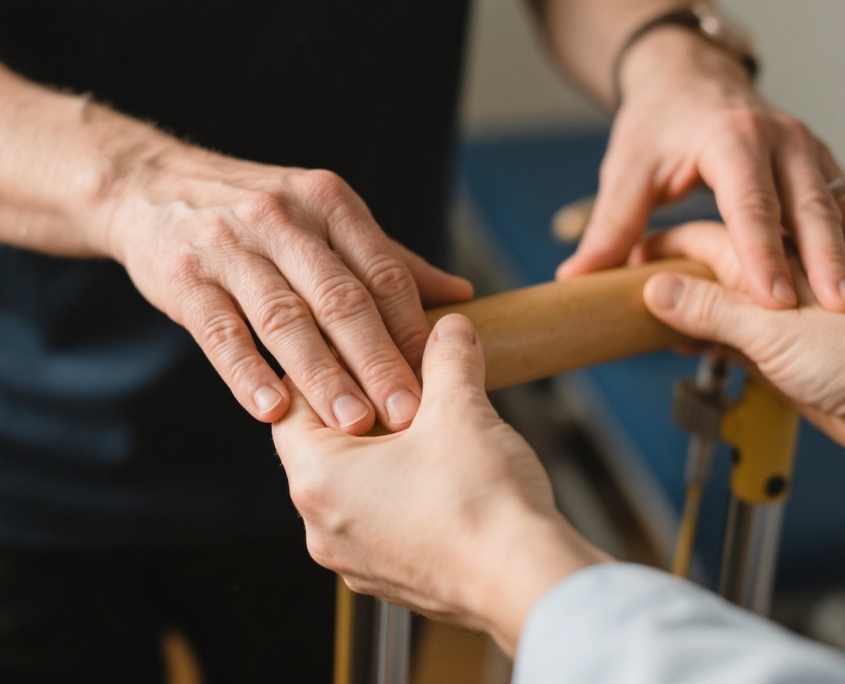
Research into hand recovery after stroke consistently shows that high-repetition, task-specific training helps retrain the brain and improve dexterity.
Examples include:
- Picking up small objects
- Reaching and grasping
- Stacking cups
- Folding towels
- Practising buttoning or zips
The goal is not simply exercise. It is relearning meaningful movements. You can find examples of hand exercises to improve hand function after a stroke here
2. Task-Specific Training
Practising real-world tasks is often more effective than isolated exercises alone.
For example:
- Making a drink
- Holding cutlery
- Using a phone
- Carrying shopping
- Opening containers
These activities help improve coordination, motor planning, and confidence in daily life.
3. Strengthening Grip and Finger Movement
Grip weakness is common after stroke and can limit independence.
A neurological physiotherapist may use:
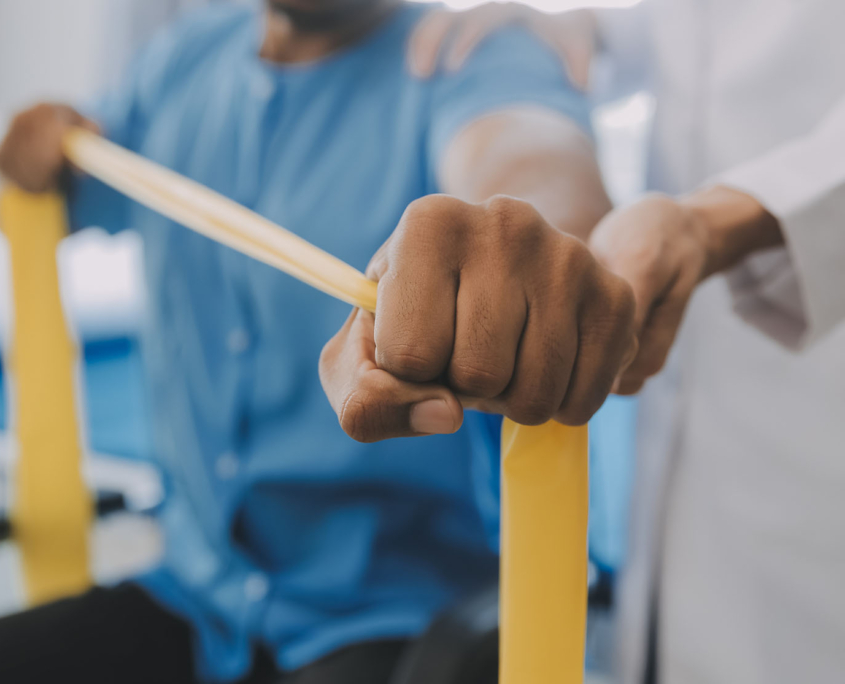
- Grip strengthening exercises
- Putty exercises
- Resistance training
- Functional reaching tasks
- Electrical stimulation (FES)
Improving finger extension (opening the hand) is often especially important for functional recovery.
4. Sensory Retraining
Hand recovery is not only about strength.
Reduced sensation and awareness of the hand can affect coordination and control. Therapy may include:
- Texture recognition
- Object identification
- Weight discrimination exercises
- Mirror therapy
- Sensory stimulation
5. Intensive Neurological Physiotherapy
Research suggests that greater intensity and frequency of rehabilitation can improve outcomes after stroke.
Unfortunately, many stroke survivors in the UK receive less therapy than recommended once discharged from hospital.
Private neurological physiotherapy can help bridge this gap by providing:
- Earlier access to rehabilitation
- More frequent sessions
- Individualised programmes
- Ongoing progression
- Home-based rehabilitation

Why Early Stroke Rehabilitation Matters
Starting rehabilitation early can make a significant difference.
The brain is especially responsive to rehabilitation in the weeks and months following stroke, although improvement can still occur later.
Delays in rehabilitation may lead to:
- Learned non-use of the affected hand
- Muscle stiffness
- Reduced confidence
- Reduced independence
This is why many people choose to supplement NHS rehabilitation with private neurological physiotherapy while waiting for community services.
Exercises That May Help Improve Hand Function After Stroke
Some commonly used exercises include:
- Finger tapping
- Picking up coins or beads
- Wrist stretches
- Grip squeezes
- Reaching activities
- Supported weight-bearing through the arm
- Opening and closing the hand repeatedly
However, exercises should always be tailored to the individual. The best rehabilitation programmes focus on meaningful goals and safe progression.
Recovery Is About More Than Exercises
Hand recovery after stroke is not simply about movement.
Improving hand function can help restore:
- Independence
- Confidence
- Ability to work
- Social participation
- Quality of life
Even small improvements can make everyday activities easier and reduce reliance on others.
How Neurological Physiotherapy Can Help?
At Neurological Physiotherapy, we provide specialist stroke rehabilitation across South Manchester, including Didsbury, Chorlton-cum-Hardy, Sale, Altrincham and Stockport.
Our neurological physiotherapists provide:
- Tailored rehabilitation programmes
- Hand and upper limb rehabilitation
- Home-based stroke physiotherapy exercises
- Functional electrical stimulation (FES)
- Goal-focused therapy
- Support for carers and families
We understand that every stroke recovery journey is different, and rehabilitation should be tailored to the individual, not delivered as a standardised pathway. Contact us today to discuss how we can help you improve hand function after a stroke.
Frequently Asked Questions About Hand Recovery After Stroke
How long does it take to regain hand function after a stroke?
Recovery varies for every person. Some people improve within weeks, while others continue improving over months or years with ongoing rehabilitation.
Can physiotherapy improve hand dexterity after stroke?
Yes. Specialist neurological physiotherapy can help improve strength, coordination, grip control, and functional use of the hand through repetitive, task-specific rehabilitation.
Is it ever too late to improve hand function after a stroke?
No. Research shows the brain can continue adapting and improving long after the initial stroke, particularly with consistent rehabilitation.
What is neurological physiotherapy?
Neurological physiotherapy is specialist rehabilitation for people with conditions affecting the brain and nervous system, such as stroke, Parkinson’s disease or multiple sclerosis.
Start Improving Hand Function After Stroke
Recovery after stroke can feel overwhelming, especially when hand function affects everyday independence.
But improvement is possible.
The right rehabilitation at the right time can help retrain movement, improve confidence, and support long-term recovery.
If you or a loved one is looking for specialist support with stroke rehabilitation and hand recovery, contact Neurological Physiotherapy to learn more about our neurological physiotherapy services.